What is a COA?
Understanding Certificates of Analysis in Laboratory Research
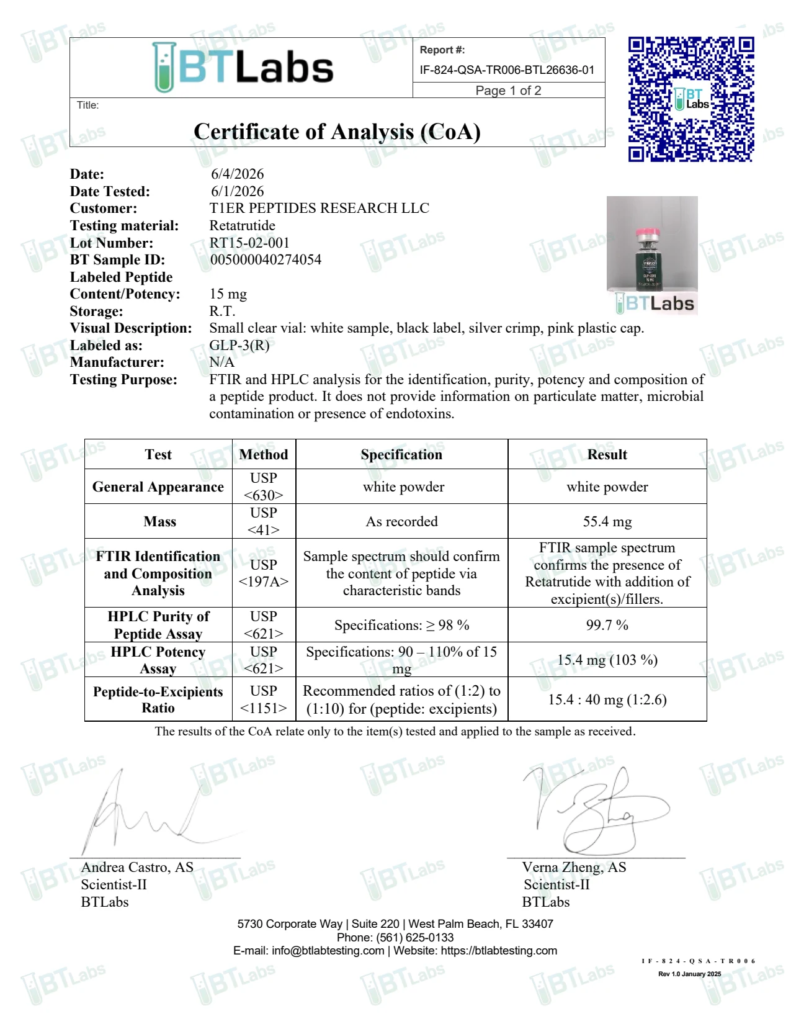
A Certificate of Analysis (COA) is a laboratory document that summarizes analytical testing performed on a specific batch of material. COAs provide transparency by documenting testing results, batch information, analytical methods, and quality-control data associated with a particular lot.
In laboratory environments, Certificates of Analysis are commonly used to help researchers review testing documentation and verify that analytical evaluations have been performed on a material before use in research settings.
Why Are Certificates of Analysis Important?
Certificates of Analysis serve several important functions within research and laboratory environments:
Provide documented analytical testing results
Support batch traceability and recordkeeping
Improve transparency regarding testing procedures
Help verify product identity through analytical methods
Document purity and quality-control results
Maintain consistency between production batches
A COA allows researchers to review testing information associated with a specific batch rather than relying solely on product labeling or descriptions.
What Information Is Typically Included in a COA?
While formats may vary between laboratories, most Certificates of Analysis contain several key sections.
Batch Information
Batch information identifies the specific lot that was tested.
This may include:
Product name
Batch or lot number
Manufacturing date
Testing date
Reference numbers
Sample identification
Batch information helps maintain traceability throughout the quality-control process.
Identity Verification
Identity testing is performed to confirm that the material analyzed matches the expected compound or reference standard.
Common analytical methods used for identity verification may include:
Mass Spectrometry (MS)
Liquid Chromatography–Mass Spectrometry (LC-MS)
Nuclear Magnetic Resonance (NMR)
Infrared Spectroscopy (IR)
Identity verification helps document that the material tested corresponds to the expected analytical profile.
Purity Analysis
Purity testing evaluates the percentage of the target compound present within a sample.
One of the most common analytical techniques used for purity analysis is:
High Performance Liquid Chromatography (HPLC)
HPLC separates individual components within a sample and allows laboratories to evaluate purity levels based on chromatographic analysis.
Purity data is commonly expressed as a percentage.
Endotoxin Testing
Some laboratories perform endotoxin testing as part of their analytical review process.
Endotoxins are naturally occurring compounds associated with certain bacterial cell walls and are commonly evaluated in laboratory quality-control procedures.
Testing methods may include:
Limulus Amebocyte Lysate (LAL) testing
Chromogenic testing methods
Gel clot testing
Turbidimetric testing
Testing results are typically reported within the COA when applicable.
Analytical Methods
A COA should identify the analytical methods used during testing.
Examples include:
HPLC
LC-MS
Mass Spectrometry
UV Spectroscopy
NMR
Endotoxin Analysis
Documenting analytical methods improves transparency and allows researchers to understand how results were obtained.
How to Read a Certificate of Analysis
When reviewing a COA, researchers often examine:
1. Product Identification
Confirm that the product name and batch number match the material being evaluated.
2. Testing Date
Review when testing was performed.
3. Analytical Methods
Verify which analytical methods were used during evaluation.
4. Identity Results
Review identity verification data and supporting analytical information.
5. Purity Results
Examine reported purity percentages and associated chromatographic data when available.
6. Additional Quality-Control Results
Review any additional testing performed, including endotoxin analysis or other quality-control metrics.
Batch Traceability and Documentation
One of the most important functions of a Certificate of Analysis is maintaining batch traceability.
Batch traceability allows documentation to remain linked to a specific production lot, creating a transparent record of:
Manufacturing information
Analytical testing
Quality-control review
Laboratory documentation
Traceability supports consistency and accountability throughout the research supply process.
Common Questions About Certificates of Analysis
What does COA stand for?
COA stands for Certificate of Analysis.
What is the purpose of a COA?
A COA documents analytical testing results associated with a specific batch of material.
What analytical methods are commonly listed on a COA?
Common methods include HPLC, LC-MS, Mass Spectrometry, NMR, and endotoxin testing procedures.
Why is batch information included?
Batch information supports traceability and helps connect testing results to a specific lot.
Why is purity testing important?
Purity testing provides analytical data regarding the composition of a tested sample.
Commitment to Transparency
At T1ER Peptides, transparency and documentation are central to our quality-control process. Certificates of Analysis provide researchers with access to batch-specific analytical information, testing methods, and supporting documentation for greater transparency and traceability.
The materials referenced on this website are intended solely for laboratory research purposes. These products have not been reviewed, approved, or evaluated by the U.S. Food and Drug Administration (FDA) for human or veterinary use. Information provided is for educational and research documentation purposes only and should not be interpreted as medical, therapeutic, or treatment-related information.