Batch Transparency
Understanding Traceability, Documentation, and Quality Assurance
Introduction
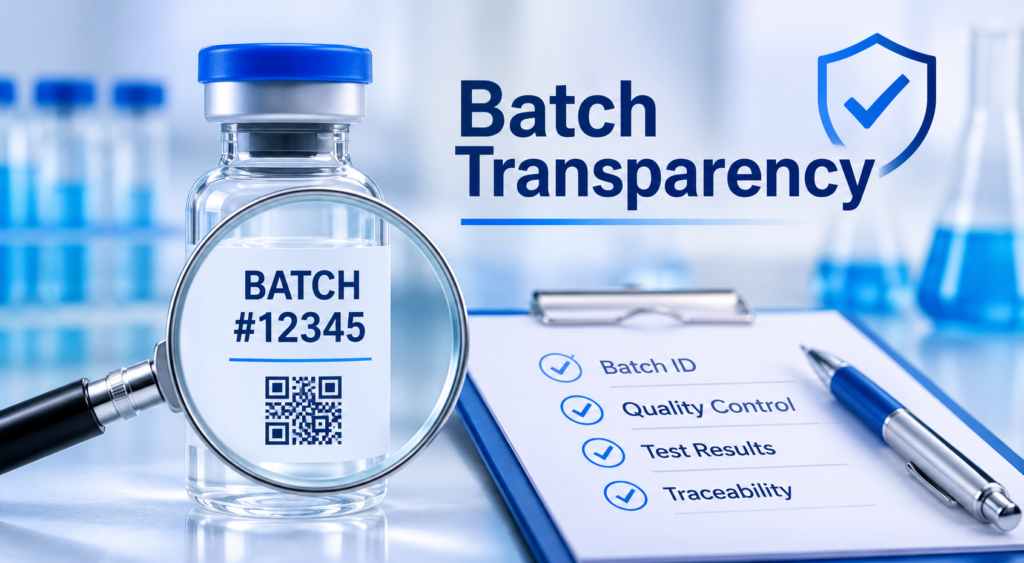
Batch transparency is the practice of maintaining clear documentation that connects analytical testing results, quality-control records, and manufacturing information to a specific production lot.
Within laboratory and research environments, transparency and traceability play important roles in supporting documentation standards, quality assurance initiatives, and analytical review processes.
Batch-specific documentation allows researchers to review information associated with a particular lot rather than relying solely on general product information.
What Is Batch Transparency?
Batch transparency refers to the ability to trace a material back to its associated documentation, testing records, and quality-control data.
A transparent batch documentation system may include:
Batch or lot numbers
Testing records
Certificates of Analysis (COAs)
Analytical reports
Testing dates
Quality-control documentation
Manufacturing records
Maintaining these records helps support consistency and accountability throughout the research supply chain.
Why Batch Transparency Matters
Transparency is a fundamental component of modern quality-assurance systems.
Benefits of batch transparency include:
Improved traceability
Greater accountability
Enhanced documentation standards
Better quality-control review
Increased confidence in analytical records
Support for research integrity initiatives
Providing access to batch-specific information helps researchers review documentation associated with a particular production lot.
Understanding Batch Traceability
Batch traceability is the process of linking testing and documentation records to a specific batch.
Traceability systems help maintain records related to:
Batch Identification
Each production lot is assigned a unique identifier that distinguishes it from other batches.
Analytical Testing
Laboratory testing results are associated with the specific batch evaluated.
Quality-Control Review
Quality-control records remain linked to the corresponding production lot.
Documentation Management
Supporting records are maintained to preserve transparency and traceability.
Together, these systems help establish a documented chain of information throughout the quality-control process.
The Role of Certificates of Analysis
Certificates of Analysis (COAs) are among the most important transparency tools used within laboratory environments.
A COA may contain:
Product identification
Batch number
Testing date
Identity verification data
Purity analysis results
Analytical methods
Endotoxin testing information
Laboratory documentation
By connecting analytical results to a specific batch, COAs help improve transparency and documentation standards.
Analytical Testing and Batch Documentation
Analytical testing serves as a foundation for batch transparency.
Common testing methods may include:
High-Performance Liquid Chromatography (HPLC)
Used to evaluate sample composition and generate purity-related analytical data.
Liquid Chromatography-Mass Spectrometry (LC-MS)
Used to support identity verification and analytical characterization.
Mass Spectrometry (MS)
Provides molecular analysis and verification data.
Endotoxin Testing
May be performed as part of broader quality-control procedures when applicable.
Documenting testing methodologies helps provide context for analytical results associated with each batch.
Quality Assurance Through Documentation
Quality assurance extends beyond analytical testing alone.
Comprehensive documentation systems often include:
Batch records
Testing reports
Quality-control reviews
Traceability records
Analytical data
Storage documentation
Manufacturing information
Maintaining organized records helps support transparency throughout the research supply process.
Transparency and Research Integrity
Research integrity relies on accurate documentation and reliable recordkeeping.
Batch transparency supports research integrity by helping ensure:
Analytical results remain traceable
Documentation is accessible
Quality-control processes are recorded
Testing information can be reviewed
Records remain associated with specific production lots
Transparency contributes to accountability and consistency within laboratory environments.
Common Components of a Transparent Quality System
Organizations focused on quality assurance often incorporate:
Batch Traceability
Systems designed to maintain lot-specific records.
Analytical Testing
Independent laboratory evaluations and documentation.
Quality-Control Review
Review of testing data and supporting records.
Documentation Retention
Preservation of records for future reference and review.
Certificate Availability
Access to batch-specific Certificates of Analysis when available.
Together, these components support a comprehensive transparency framework.
Frequently Asked Questions
What is batch transparency?
Batch transparency is the practice of maintaining documentation that links testing results and quality-control records to a specific production lot.
Why is batch traceability important?
Batch traceability helps ensure testing data and documentation remain associated with a specific batch.
What information is typically associated with a batch?
Common information includes batch numbers, analytical testing results, testing dates, quality-control records, and Certificates of Analysis.
How do COAs support transparency?
Certificates of Analysis provide batch-specific laboratory documentation and analytical testing information.
Why are quality-control records important?
Quality-control records help document testing procedures, analytical results, and supporting information associated with a batch.
What role does analytical testing play in transparency?
Analytical testing generates objective laboratory data that can be linked to a specific production lot through traceability systems.
Commitment to Transparency
At T1ER Peptides, transparency, analytical testing, batch traceability, and quality documentation are foundational principles of our quality standards.
By maintaining batch-specific records and providing access to supporting documentation, researchers can review information associated with the materials supplied for laboratory research purposes.
Transparency helps support accountability, documentation integrity, and confidence in analytical reporting.
Regulatory Notice
The information provided on this page is intended solely for educational and research documentation purposes.
Products sold by T1ER Peptides are intended strictly for laboratory research use only and are not intended for human or veterinary use.
These products have not been reviewed, approved, or evaluated by the U.S. Food and Drug Administration (FDA). No content on this website should be interpreted as medical advice, treatment guidance, therapeutic information, dosing instructions, or recommendations for human or animal use.