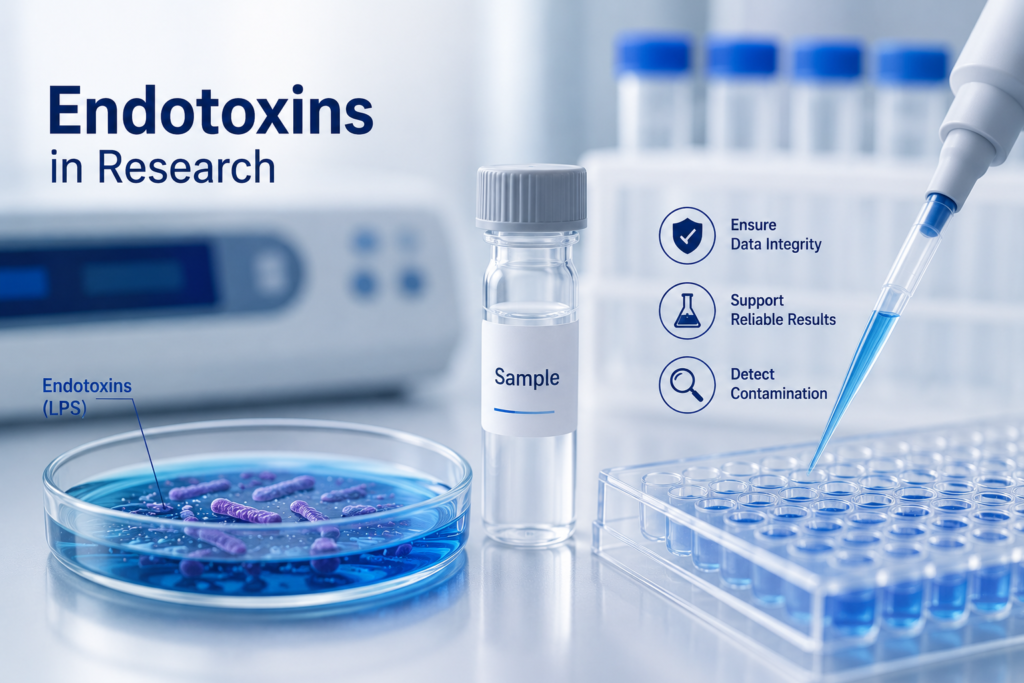
Endotoxins in Research
Understanding Endotoxin Testing and Quality Control
Introduction
Endotoxins are naturally occurring bacterial byproducts that laboratories commonly evaluate as part of quality-control and analytical testing programs. Endotoxin testing is widely used throughout scientific research, pharmaceutical manufacturing, biotechnology, and laboratory environments to help assess cleanliness, process controls, and overall quality-assurance standards.
Because endotoxins can persist even after bacteria are no longer present, many organizations incorporate endotoxin testing into broader quality-control frameworks alongside identity verification, purity analysis, and batch traceability procedures.
What Are Endotoxins?
Endotoxins are components associated with the outer membrane of certain Gram-negative bacteria. During bacterial growth, death, or cell disruption, endotoxins may be released into the surrounding environment.
Due to their stability, endotoxins can remain present even when viable bacteria are no longer detectable.
For this reason, endotoxin monitoring is commonly incorporated into laboratory quality-control systems.
Why Do Laboratories Test for Endotoxins?
Endotoxin testing serves as an additional quality-control measure used to evaluate:
Manufacturing controls
Environmental cleanliness
Process consistency
Laboratory quality systems
Batch-to-batch verification
Documentation standards
When combined with analytical testing and batch traceability procedures, endotoxin testing provides another layer of quality documentation.
Endotoxin Testing as Part of Quality Assurance
Quality-control programs often include multiple analytical evaluations designed to verify consistency and transparency.
Common testing categories include:
Identity Verification
Testing used to confirm the identity of a material through analytical methods.
Purity Analysis
Analytical testing used to evaluate composition and identify potential impurities.
Endotoxin Testing
Testing used to assess the presence of bacterial endotoxins.
Batch Verification
Procedures used to associate analytical results with specific production lots.
Documentation Review
Independent review of testing records and quality-control documentation.
Together, these measures contribute to comprehensive quality-assurance programs.
Common Endotoxin Testing Methods
Several analytical methods are commonly used to evaluate endotoxin levels.
Limulus Amebocyte Lysate (LAL) Testing
LAL testing is one of the most widely recognized endotoxin testing methodologies.
This testing method utilizes biological reactions that can detect endotoxin presence within a sample.
Chromogenic Endotoxin Testing
Chromogenic methods generate measurable color changes when endotoxins are detected.
These methods are commonly used within laboratory environments because they provide quantitative results.
Turbidimetric Testing
Turbidimetric testing measures changes in sample clarity or cloudiness that may occur during testing procedures.
This method can be used to evaluate endotoxin concentrations through analytical instrumentation.
Gel Clot Testing
Gel clot testing is a traditional endotoxin testing methodology that identifies endotoxin presence through clot formation under controlled laboratory conditions.
Sources of Endotoxin Contamination
Potential sources may include:
Raw materials
Manufacturing equipment
Water systems
Environmental exposure
Processing procedures
Packaging components
Quality-control programs are designed to minimize contamination risks and maintain process consistency.
Endotoxin Testing and Batch Traceability
One of the most important aspects of quality assurance is maintaining batch traceability.
Traceability systems commonly include:
Batch numbers
Testing dates
Laboratory reports
Certificates of Analysis (COAs)
Analytical results
Quality-control documentation
Maintaining accurate records allows testing results to remain associated with a specific production lot.
The Role of Certificates of Analysis
A Certificate of Analysis (COA) may include endotoxin testing results when applicable.
Additional information commonly found within a COA includes:
Product identification
Batch information
Analytical methods
Purity analysis
Identity verification
Testing dates
Laboratory documentation
COAs help support transparency by providing access to batch-specific testing information.
Why Transparency Matters
Transparency is an important component of laboratory quality systems.
Providing access to testing documentation allows researchers to review:
Analytical methods
Testing procedures
Batch records
Quality-control results
Supporting laboratory documentation
Transparency supports accountability and confidence in research documentation practices.
Frequently Asked Questions
What are endotoxins?
Endotoxins are naturally occurring bacterial byproducts associated with certain Gram-negative bacteria.
Why is endotoxin testing performed?
Endotoxin testing is commonly used as part of broader laboratory quality-control and documentation programs.
What is LAL testing?
LAL (Limulus Amebocyte Lysate) testing is one of the most widely used methods for detecting bacterial endotoxins.
Can endotoxins exist without live bacteria?
Yes. Endotoxins may remain present even when viable bacteria are no longer detectable.
Why is batch traceability important?
Batch traceability allows testing results and quality-control records to remain associated with specific production lots.
Where can researchers find endotoxin testing information?
Endotoxin testing information may be included within Certificates of Analysis, laboratory reports, and quality-control documentation when applicable.
Commitment to Quality and Transparency
At T1ER Peptides, transparency, batch traceability, analytical testing, and quality-control documentation are fundamental components of our quality standards.
When applicable, analytical testing documentation may include endotoxin testing results alongside identity verification, purity analysis, and batch-specific records to support transparency throughout the research supply process.
Regulatory Notice
The information provided on this page is intended solely for educational and research documentation purposes.
Products sold by T1ER Peptides are intended strictly for laboratory research use only and are not intended for human or veterinary use.
These products have not been reviewed, approved, or evaluated by the U.S. Food and Drug Administration (FDA). No information on this website should be interpreted as medical advice, treatment guidance, therapeutic information, dosing instructions, or recommendations for human or animal use.